Forget the Ice Bath: How Elite Athletes Are Using Thai Massage to Recover Faster and Train Harder
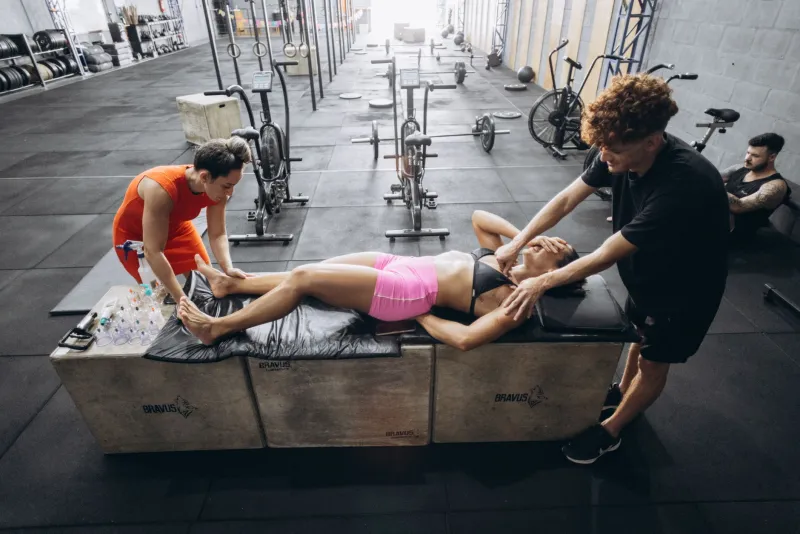
For decades, the post-game ice bath was practically a rite of passage in American sports culture. You crushed your body for two hours on the field, then you paid for it by sitting in a tub of near-freezing water while trying not to scream. Coaches swore by it. Athletes hated it. And honestly? The science was always a little murky.
Fast forward to now, and something interesting is happening in professional locker rooms across the country. Athletes are stepping away from the cryotherapy chambers and reaching for something that has existed for over 2,500 years: traditional Thai massage. And the results — both anecdotal and increasingly evidence-backed — are turning heads in the sports medicine world.
What's Wrong With Ice, Anyway?
Cold therapy isn't going away entirely, but its reputation has taken some hits. A growing body of research suggests that while icing reduces inflammation in the short term, it may actually interfere with the body's natural repair process. Inflammation, it turns out, is part of how muscles rebuild stronger after intense exertion. Shutting it down too aggressively might be slowing recovery rather than speeding it up.
Sports physiologists have been quietly questioning the ice bath gospel for years. When you combine that skepticism with mounting interest in holistic, whole-body recovery methods, it creates a pretty wide opening for an ancient healing tradition to walk right through.
What Thai Massage Actually Does to an Athlete's Body
Traditional Thai massage — the kind rooted in centuries of practice, not the watered-down version you sometimes find at strip mall spas — works on a completely different philosophy than most Western recovery methods. Rather than targeting isolated muscle groups or reducing swelling through temperature, it works along what Thai practitioners call sen lines: a network of energy pathways running throughout the body that correspond closely to what Western anatomy recognizes as connective tissue, nerve pathways, and fascial lines.
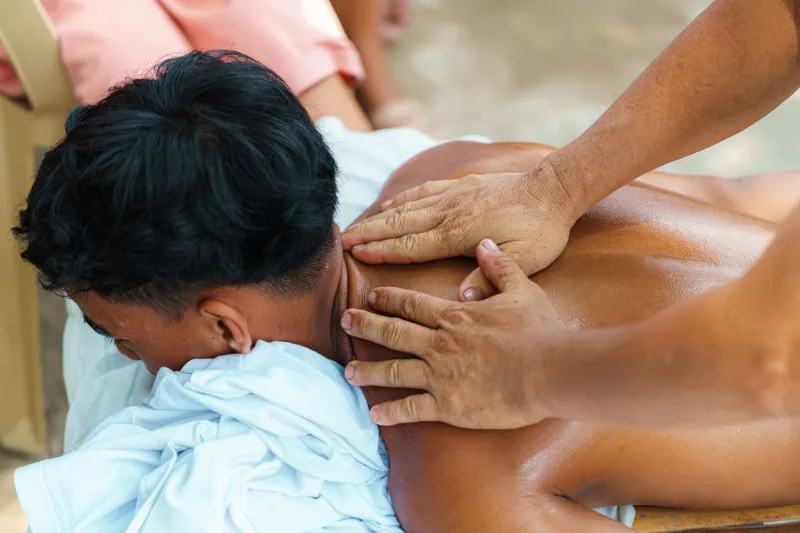
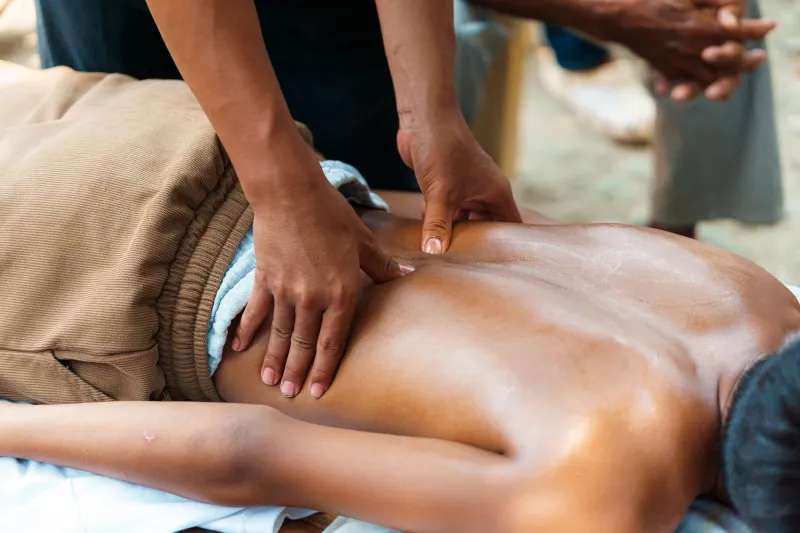
During a session, a trained therapist uses a combination of rhythmic compression, passive stretching, and joint mobilization to work through these pathways. For an athlete, this translates to a few very practical benefits:
- Improved circulation: The compression techniques actively push blood and lymphatic fluid through congested areas, helping flush metabolic waste products like lactic acid that build up during intense training.
- Restored range of motion: The passive stretching component — which can look almost like assisted yoga — addresses the tightness and shortening that happen in muscles after heavy use.
- Nervous system regulation: Hard training keeps the body in a state of sympathetic nervous system dominance (the fight-or-flight mode). Thai massage has been shown to shift the body toward parasympathetic activity, which is where real recovery actually happens.
- Fascial release: The sustained pressure applied along sen lines works directly on the fascia — the connective tissue that wraps around every muscle. Tight fascia is a major contributor to sports injuries, and most conventional recovery methods barely touch it.
Sports medicine professionals who have integrated Thai bodywork into their practice describe it as addressing the whole kinetic chain rather than just the sore spot. A hamstring problem, for instance, is rarely just about the hamstring. Thai massage follows the tension upstream and downstream, treating the body as a connected system.
The Professionals Are Paying Attention
You don't have to look hard to find Thai massage showing up in elite athletic contexts. Several NFL teams have quietly added Thai-trained bodywork practitioners to their support staff. Endurance athletes — marathoners, triathletes, ultra-runners — have been particularly vocal about incorporating it into their training cycles. In the MMA world, where full-body conditioning and rapid recovery are non-negotiable, Thai massage has been a staple for years.
The appeal makes sense when you think about what these athletes need. They're not just sore — they're operating at the edge of what their bodies can handle, week after week. They need recovery methods that are thorough, that address mobility alongside soreness, and that don't leave them feeling wrecked the next day. A well-executed Thai massage session does all of that.
Sports medicine professionals who've observed the shift note that Thai massage fills a gap that massage therapy and physical therapy sometimes leave open. Physical therapy tends to be corrective and targeted. Swedish massage is relaxing but relatively superficial. Thai bodywork sits in a unique middle ground: it's therapeutic, it's deep, and it covers the whole body systematically.
Why American Fitness Culture Is Finally Catching Up
Here's the honest truth: Thai practitioners have understood the body as an interconnected system for centuries. The sen line framework, however different it looks from a Western anatomy chart, maps onto real physiological structures in ways that researchers are only now beginning to document properly.
American fitness culture has historically been drawn to the newest, most high-tech recovery tools — hyperbaric chambers, infrared saunas, electrical muscle stimulation devices. And some of those tools are genuinely useful. But there's a growing recognition that ancient, hands-on healing traditions carry wisdom that no gadget can fully replicate. The human body responds to human touch in ways that are measurable, meaningful, and increasingly well-understood.
The shift is also cultural. Younger athletes especially are more open to holistic health approaches than previous generations. Concepts like breathwork, mindfulness, and energy-based healing that once seemed fringe have moved toward the mainstream. Thai massage fits naturally into that broader wellness framework.
What to Expect If You're an Active Person Trying It
You don't need to be a professional athlete to benefit from Thai massage as a recovery tool. If you're a regular gym-goer, a weekend warrior, a runner, or anyone who puts consistent physical demands on their body, the same principles apply.
A few things worth knowing going in:
Timing matters. For recovery purposes, scheduling a session 24 to 48 hours after intense activity tends to work better than immediately post-workout. Your muscles need a little time before deep work is productive.
Communicate with your therapist. A skilled practitioner will adjust pressure and technique based on your condition. If you're nursing an injury or have specific problem areas, say so upfront.
You'll feel it the next day. Not in a bad way, usually — more like the feeling after a really good stretch. Some mild soreness is normal, especially in your first few sessions. It fades, and what replaces it is typically a noticeable improvement in how freely you move.
Consistency compounds. One session is genuinely useful. A regular practice — even once or twice a month — produces cumulative benefits that single sessions can't match.
The Bottom Line
Ice baths had a good run. But the evidence is pointing toward something more nuanced, more holistic, and frankly more effective for serious athletic recovery. Traditional Thai massage isn't a trend — it's a time-tested system that professional sports is finally starting to take seriously.
At Lek Thai Relaxation, we've seen firsthand what consistent Thai bodywork does for people who put real demands on their bodies. Whether you're training for your first 5K or coming off a competitive season, ancient healing and modern athletic science are telling the same story: the body recovers best when it's treated as a whole.
Maybe it's time to drain the ice tub.