Can't Sleep? Ancient Thai Wellness Rituals Are Outperforming the Pill Bottle
We're Exhausted, and the Usual Fixes Aren't Working
Let's be honest about where we are as a country when it comes to sleep. The CDC has called insufficient sleep a public health epidemic. Roughly one in three American adults doesn't get the recommended seven or more hours a night. Prescription sleep aid sales have climbed steadily for years, and the over-the-counter melatonin market is now worth billions.
And yet — people are still tired. Chronically, bone-deep tired.
The problem with most conventional sleep solutions isn't that they don't work in the short term. It's that they target the symptom (not being asleep) rather than the system that's supposed to get you there. Traditional Thai wellness practices take a completely different approach — one that's been refined over centuries and is now starting to attract serious scientific attention.
Why Prescription Sleep Aids Are a Patch, Not a Fix
Sleep medications like zolpidem (Ambien) and benzodiazepines work by sedating the central nervous system. They can get you unconscious, but research has consistently shown that the sleep they produce is architecturally different from natural sleep. You spend less time in slow-wave deep sleep and REM — the stages where your brain actually consolidates memory, regulates emotion, and repairs tissue.
In other words, you might clock eight hours and still wake up feeling hollow.
Melatonin, the gentler OTC option, has its place — particularly for jet lag or circadian rhythm disruption. But for the kind of chronic, stress-driven insomnia that most Americans are dealing with, melatonin alone rarely moves the needle. It signals when to sleep without addressing the nervous system activation that's keeping you wired at 2 a.m.
This is exactly where traditional Thai wellness practices step in.
The Thai Framework: Treating the Root, Not the Symptom
Traditional Thai healing views the body as an integrated system — physical, energetic, and mental — rather than a collection of isolated problems to be managed. Insomnia, in this framework, isn't just a brain chemistry issue. It's often a sign that the body's energy is stagnant, that the nervous system hasn't been given a genuine off-ramp from the stress of the day, or that heat and tension have accumulated in ways that block natural rest.
This holistic perspective has some compelling parallels with what modern sleep science is finding. Chronic insomnia is increasingly understood as a state of hyperarousal — the nervous system stuck in a low-grade alert mode that never fully powers down. Addressing that hyperarousal is what actually resolves the problem.
Here's how specific Thai practices do exactly that.
Thai Massage and the Nervous System Reset
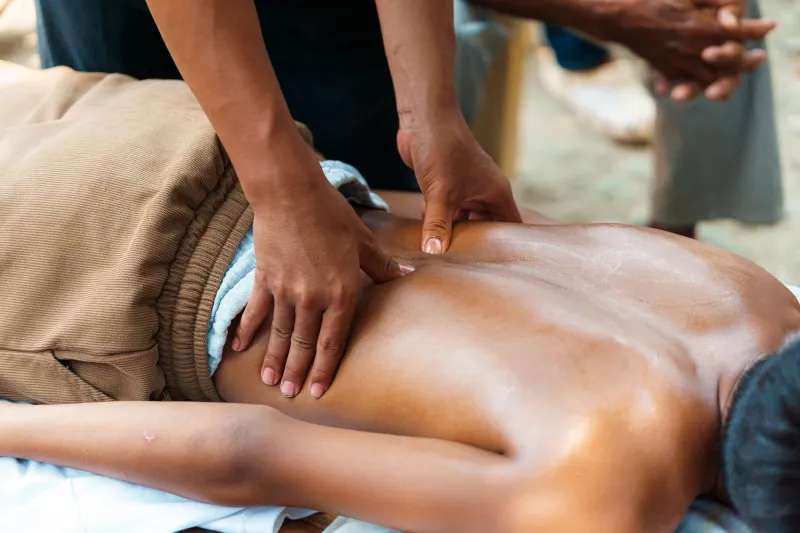
One of the most well-documented effects of Thai massage is its impact on the autonomic nervous system — specifically, its ability to shift the body from sympathetic dominance (fight-or-flight) into parasympathetic activation (rest-and-digest).
A 2015 study published in the Journal of Bodywork and Movement Therapies found that Thai massage significantly reduced anxiety and cortisol levels in participants compared to a control group. Cortisol, the primary stress hormone, is one of the main culprits behind nighttime wakefulness. When it stays elevated into the evening — which it does for a lot of chronically stressed Americans — it actively suppresses melatonin production and keeps the brain in alert mode.
Regular Thai massage sessions, particularly those incorporating the slow, rhythmic compression work along the body's energy lines, have been shown to lower cortisol, reduce heart rate, and increase levels of serotonin — the neurotransmitter that's a direct precursor to melatonin. You're essentially creating the biochemical conditions for good sleep, rather than chemically forcing your brain into unconsciousness.
Herbal Traditions That Actually Have Research Behind Them
Thai herbal medicine has a rich tradition of using plants to support sleep and calm the nervous system. Several of these have now been studied in clinical contexts with promising results.
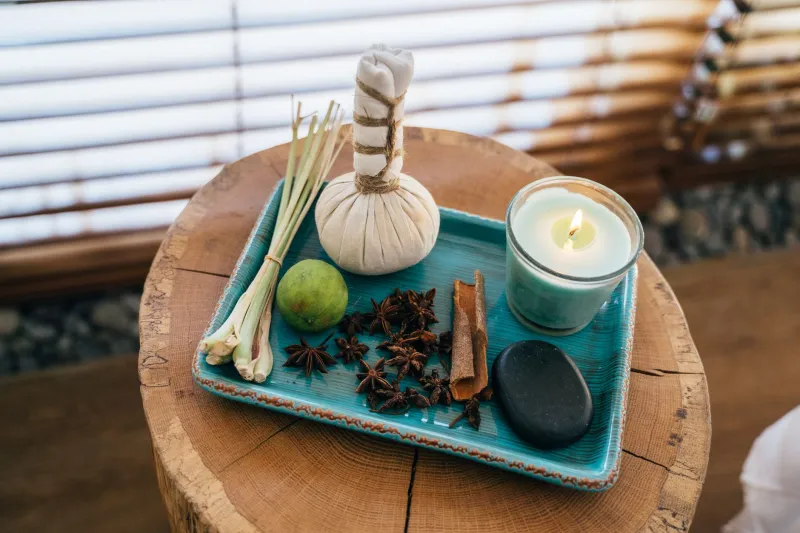
Krachai Dam (Black Ginger) has been studied for its adaptogenic properties — helping the body regulate its stress response over time rather than just blunting it acutely. Lemongrass, a staple of Thai herbal steam treatments, contains compounds shown to have mild anxiolytic (anti-anxiety) effects. Pandan leaf, used in Thai herbal compresses, has demonstrated sedative-like properties in animal studies.
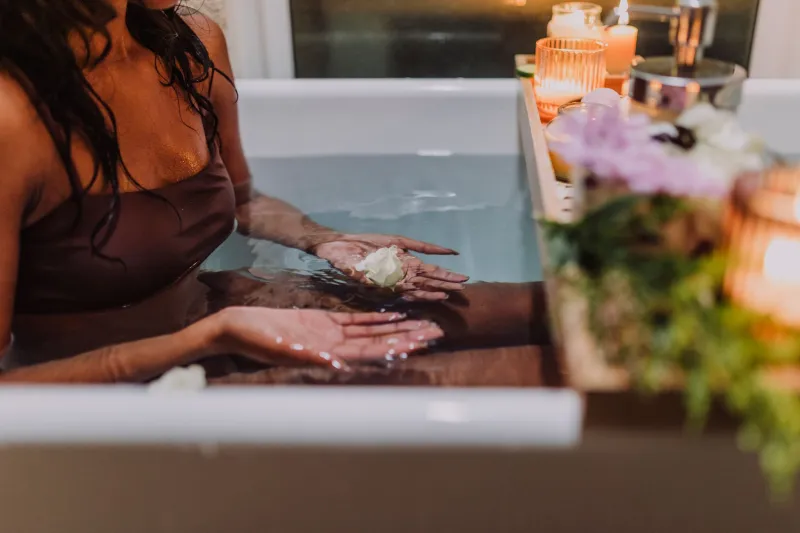
Perhaps most relevant to the sleep conversation is Thai herbal steam therapy, which combines heat, aromatic herbs, and stillness in a way that simultaneously relaxes muscle tension, clears the respiratory system, and triggers the kind of deep physiological calm that's the precondition for quality sleep. Many practitioners recommend a warm herbal bath or steam session as part of an evening wind-down ritual — and the science of thermoregulation actually supports this. A drop in core body temperature after a warm bath or steam signals to the brain that it's time to sleep.
Breathwork: The Simplest Tool You're Probably Not Using
Breathwork is embedded throughout traditional Thai healing practices, and it's arguably the most accessible sleep tool of all — because you can do it anywhere, tonight, for free.
Specific breathing techniques used in Thai wellness traditions — slow, diaphragmatic breathing with extended exhales — directly activate the vagus nerve, which is the primary pathway for parasympathetic nervous system activation. Research from Stanford and other institutions has confirmed what Thai healers have known for centuries: controlled, slow breathing is one of the fastest ways to downregulate a hyperaroused nervous system.
A simple practice worth trying: inhale for four counts, hold for four, exhale for six to eight counts. Do this for five to ten minutes before bed. The extended exhale is the key — it's the physiological trigger that signals safety and calm to the brain.
A Thai-Inspired Bedtime Ritual You Can Start Tonight
You don't need to be in Thailand — or even at a spa — to begin incorporating these practices. Here's a simple evening sequence that draws on traditional Thai wellness principles:
- Warm herbal soak (15–20 minutes). Add lemongrass, ginger, or pandan to a warm bath. The heat and aromatics work together to relax muscle tension and begin your body's cooling process.
- Gentle self-massage. Using a small amount of warm oil, apply slow, sustained pressure along the soles of your feet and up your calves. This mirrors the sen line work done in Thai foot massage and is surprisingly effective at drawing nervous system energy downward, away from the overactive mind.
- Breathwork (5–10 minutes). Use the extended exhale technique described above. Do this lying down in the dark if possible.
- Digital darkness. Traditional Thai healing is built on the idea that rest is sacred — not a gap between productive hours. Protecting the last 30 minutes before sleep from screens is the modern equivalent of that respect.
The Bigger Picture
What makes Thai wellness practices compelling isn't just that they work in isolation — it's that they work together, addressing the nervous system, the body's physical tension, the breath, and even the mental relationship with rest all at once. That's a fundamentally different model than taking a pill and hoping for the best.
If you're in a cycle of poor sleep that conventional approaches haven't broken, it might be worth asking what you haven't tried yet. Sometimes the most ancient solutions are the ones that actually understand the whole problem.