Real vs. Watered Down: How to Tell If You're Getting Genuine Thai Massage or Just a Fancy Stretch
Something Got Lost on the Journey Over
Thai massage has had a remarkable run in the American wellness market. Walk through any mid-sized US city and you'll find no shortage of spas, studios, and storefronts advertising it. The words "Thai massage" have become shorthand for something vaguely exotic, deeply relaxing, and a little more interesting than your standard Swedish. Business is booming.
But here's the thing nobody's putting on their menu boards: a significant portion of what gets sold as Thai massage in this country is, at best, a loose interpretation of the real thing — and at worst, something that shares little more than a name with the ancient healing tradition it claims to represent.
That's not meant as an attack on every spa offering the service. The watering-down of traditional Thai bodywork in the US is less about bad intentions and more about a complicated process of cultural translation, commercial pressure, and incomplete training. Understanding how that happened — and what genuine practice actually looks like — is the first step toward finding the real thing.
What Traditional Thai Massage Actually Is
To appreciate the gap, you need a baseline understanding of what traditional Thai massage — known in Thailand as Nuad Phaen Boran, or ancient-style massage — actually involves.
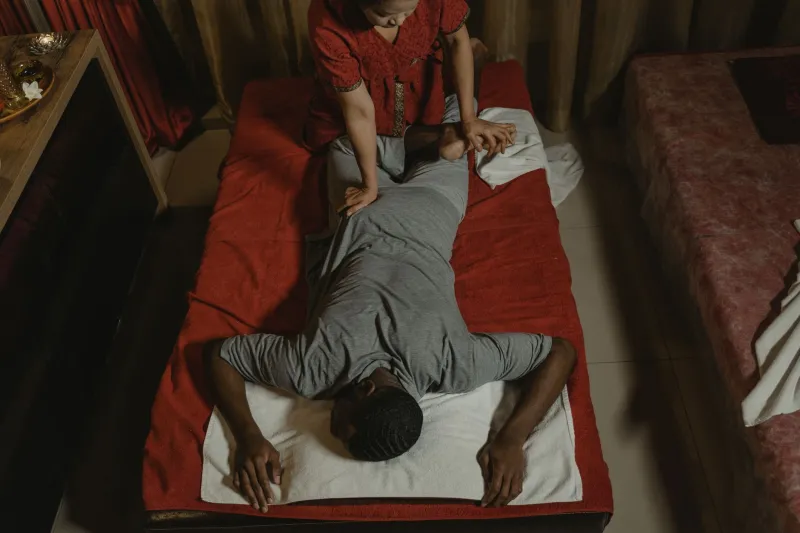
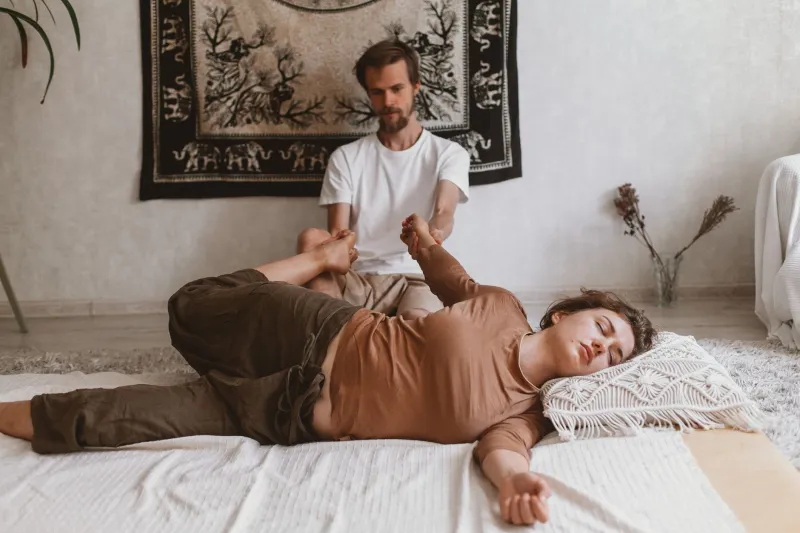
The practice is rooted in a healing framework that predates modern medicine by centuries. It draws on concepts from Ayurvedic medicine, Buddhist philosophy, and traditional Chinese medicine, working along sen lines — energy pathways believed to carry life force through the body. A trained practitioner uses their hands, thumbs, elbows, knees, and feet to apply rhythmic pressure along these pathways while guiding the recipient through passive stretches that mobilize joints and release deep-seated tension.
It's typically performed on a floor mat, with the recipient fully clothed in loose, comfortable garments. There's no oil. There's no table. The work is dynamic, intuitive, and often described as a kind of assisted yoga. A full traditional session can last 90 minutes to two hours, and the experience is genuinely transformative when done well.
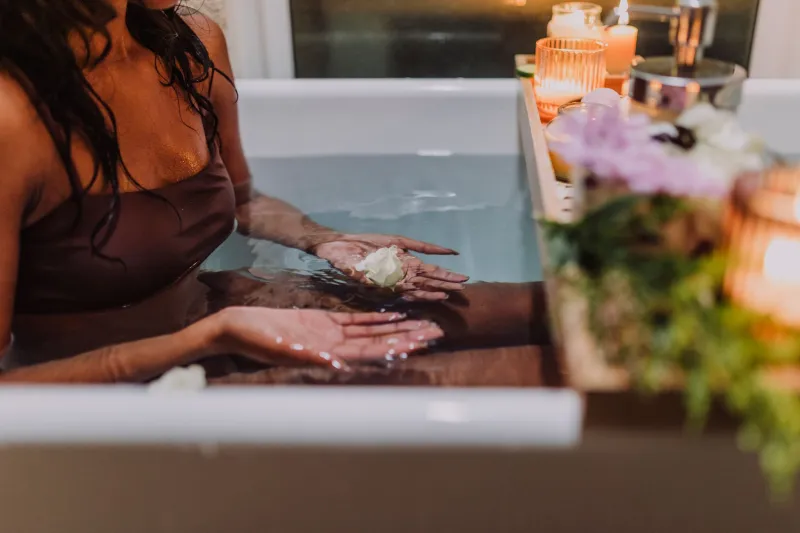
Now compare that to the "Thai massage" that often shows up in American day spas: a 60-minute table session, sometimes with oil, featuring a few token leg stretches sandwiched between standard Swedish strokes. It might feel nice. It's probably relaxing. But it isn't Thai massage in any meaningful sense.
How Westernization Changed the Practice
The commercialization of Thai massage in the US followed a familiar pattern. As demand grew through the 1990s and 2000s, training programs proliferated — many of them offering abbreviated certifications that could be completed in a weekend. The deep study required to practice traditional Thai bodywork authentically (legitimate Thai practitioners train for hundreds to thousands of hours) got compressed into something the American spa market could absorb quickly.
Spa culture also pushed the practice toward familiar Western expectations: tables instead of mats, oil instead of dry technique, shorter sessions, softer pressure. Guests wanted to feel pampered. They wanted an experience that fit neatly into a 50-minute slot between the facial and the pedicure. Traditional Thai massage — which can be intense, deeply physical, and occasionally uncomfortable in the most productive way — didn't always fit that mold.
The result is a bifurcated market. On one side, genuine traditional Thai bodywork practitioners offering the real thing. On the other, a much larger category of spa services wearing Thai massage's name like a costume.
Training Lineages: Why They Matter More Than You Think
One of the most reliable indicators of authentic practice is training lineage — specifically, whether a practitioner can trace their education back through a credible line of teachers with roots in traditional Thai healing.
The gold standard in the US is training that connects, directly or indirectly, to recognized institutions in Thailand — most notably Wat Pho (the Temple of the Reclining Buddha in Bangkok), which has been a center for Thai massage education for centuries, or the Old Medicine Hospital in Chiang Mai. Practitioners trained in these lineages, or by teachers who were, bring a depth of knowledge that weekend certification courses simply cannot replicate.
When evaluating a practitioner, don't be shy about asking:
- Where and with whom did you train?
- How many hours of formal training do you have?
- Do you practice on a mat or a table? (Mat work is traditional; table work is an adaptation.)
- How long are your sessions typically?
- Do you work with or without oil?
A practitioner grounded in authentic training will answer these questions confidently and with specificity. They'll know the names of their teachers. They'll be able to explain the philosophical framework behind the work.
Reading the Room (and the Menu)
Beyond credentials, there are practical signals worth paying attention to when you walk into a new place.
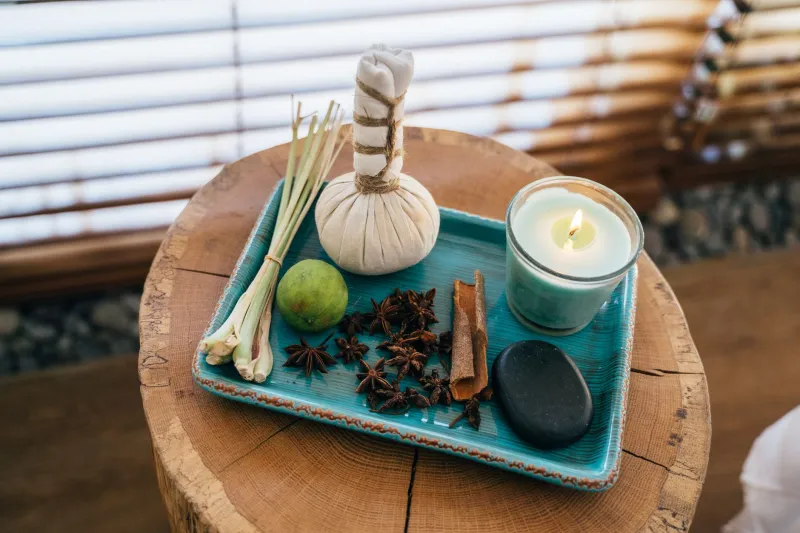
Authentic Thai massage studios typically have a different feel from standard day spas. The treatment space is often a simple room with floor mats and cushions rather than a row of massage tables. Practitioners wear simple, practical clothing. The atmosphere tends toward calm and purposeful rather than overtly luxurious.
Menu language matters too. Watch for phrases like "Thai-inspired" or "Thai-style" — these are honest admissions that what's being offered is an adaptation. That's fine, as long as you know what you're getting. But if a menu just says "Thai massage" without any further context, it's worth asking a few questions before you book.
Price can be a signal, though not a foolproof one. Authentic traditional Thai bodywork — especially from a highly trained practitioner — typically reflects the real investment of skill and time it represents. Unusually cheap sessions aren't automatically inferior, but they sometimes indicate abbreviated training or a heavily modified approach.
Why Cultural Context Is Part of the Healing
There's something that gets lost in the translation conversation that goes beyond technique: cultural context shapes the healing experience in ways that are hard to quantify but deeply real.
Traditional Thai massage isn't just a set of physical techniques. It's embedded in a worldview that treats the body as an energetic system, that values the relationship between practitioner and recipient as a kind of spiritual exchange, and that approaches healing with patience and presence. The best Thai massage practitioners — wherever they're based — carry that spirit into their work. It's palpable.
Finding authentic practice in America absolutely is possible. It takes a little more research than booking the closest spa on a wellness app, but the difference in experience is significant enough that it's worth the effort. When you find a practitioner who truly knows this tradition, you'll understand immediately why it's survived for 2,500 years — and why no amount of Westernization has been able to fully replace it.