Sitting Ourselves Crooked: What Thai Massage Therapists See in America's Posture Crisis
There's a quiet epidemic spreading through American bodies, and it doesn't show up on blood panels or MRI reports. It doesn't have a catchy diagnosis code, and most people don't notice it until the damage has been compounding for years. Thai massage therapists, however, see it the moment a new client walks through the door — in the way their shoulders roll forward, the way their chin juts out like a turtle poking from its shell, the way their hips have essentially forgotten how to move.
Poor posture has become so common in the US that it's starting to feel normal. And that normalization, practitioners say, is exactly the problem.
When "Normal" Isn't Actually Fine
Ask most Americans how their posture is, and you'll get a shrug, maybe a self-conscious laugh, maybe a half-hearted mention of sitting at a desk too long. What you probably won't hear is an understanding of what that slouch is actually doing to the body over time.
The average American now spends somewhere between 10 and 13 hours a day sitting. Add in the hours spent craning forward at a smartphone screen, hunching over a steering wheel during a commute, or sinking into a couch for an evening Netflix session, and you have a recipe for structural dysfunction that builds slowly, almost invisibly, until one day you're waking up with headaches you can't explain or a nagging ache in your lower back that just won't quit.
Thai massage therapists who work with clients regularly describe a pattern they see again and again: people come in for one specific complaint — tight shoulders, hip pain, tension headaches — and the underlying cause turns out to be a postural imbalance that's been quietly pulling the whole body out of alignment for years.
The Domino Effect Nobody Talks About
Here's the thing about posture that doesn't get nearly enough attention: the body is a chain. When one link shifts, everything connected to it has to compensate. A head that juts two inches forward — which is incredibly common among people who work at computers — adds roughly 20 to 30 extra pounds of effective load on the cervical spine. The muscles at the base of the skull tighten. The upper traps get overworked. The chest muscles shorten. The shoulder blades lose their anchoring. The mid-back stiffens to compensate. The lower back arches more to keep the whole structure upright.
By the time someone walks into a Thai massage session complaining about sciatica or chronic lower back pain, the root cause might actually be living in their neck and chest — a connection that can be easy to miss when you're only treating the symptom.
Practitioners trained in traditional Thai bodywork are taught to read the body as an integrated system. Rather than zeroing in on one isolated trouble spot, the approach looks at how energy pathways — called Sen lines in Thai tradition — run through the entire body, and how a blockage or imbalance in one area inevitably affects the flow elsewhere. It's a perspective that makes therapists particularly well-suited to tracing those postural domino effects back to their source.
What's Actually Causing This — and It's Not Just Your Desk
Yes, the modern American desk job deserves a lot of the blame. But therapists are quick to point out that posture problems don't live only in the workplace. They're baked into the way most Americans move — or don't move — throughout their entire day.
Driving is a huge one. The US is a car-dependent country in a way that most of the world simply isn't, and hours spent gripping a steering wheel with the spine compressed into a car seat takes a real toll. So does the way Americans tend to carry stress — tight jaw, raised shoulders, shallow breathing — all of which pull the body out of neutral alignment without anyone really noticing.
Smartphone use has added another layer. The phrase "text neck" gets thrown around a lot, but the reality is that the constant downward tilt required to scroll a phone screen creates the same kind of forward head posture as desk work — and most people are doing it for several hours a day on top of everything else.
And then there's footwear, sleep positions, the way people carry bags, the type of chair they sit in at home versus the office — all of it feeds into the overall postural picture. Therapists describe it as a slow accumulation rather than a single cause, which is part of why it's so hard to address through conventional medical appointments that typically focus on one complaint at a time.
What Thai Massage Actually Does About It
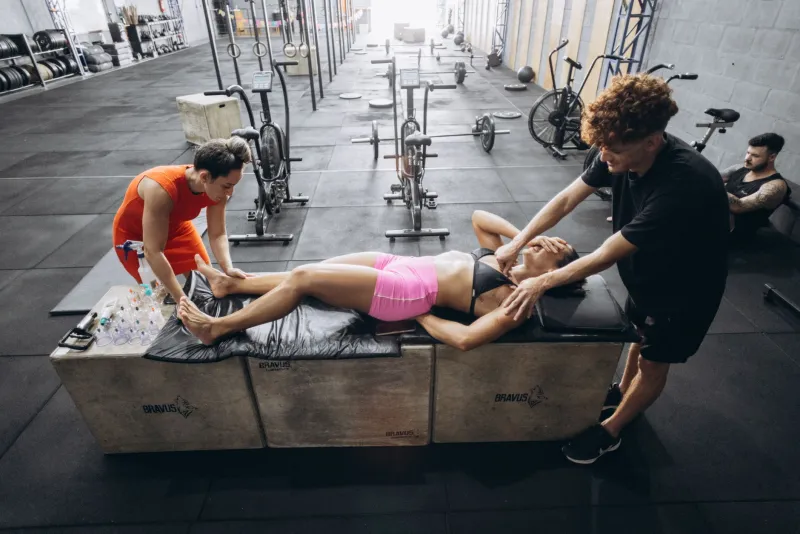
Traditional Thai massage uses a combination of assisted stretching, rhythmic compression, and pressure along the body's energy lines to address exactly the kind of full-body tightening that poor posture creates. Where a standard deep tissue session might focus on loosening a specific muscle group, Thai bodywork tends to work the entire body in a session — opening the chest, releasing the hip flexors, lengthening the spine, and restoring range of motion in areas that have quietly stiffened over months or years.
For postural issues specifically, therapists often focus on the hip flexors and the chest — two areas that chronically shorten in people who sit a lot — as well as the thoracic spine, which tends to round and stiffen in ways that are very difficult to address on your own. The assisted stretches used in Thai massage can access ranges of motion that are genuinely hard to reach through conventional stretching or even yoga without guidance.
Regular sessions, practitioners say, aren't just about relief in the moment. Over time, they can help the body remember what neutral alignment actually feels like — which makes it easier to maintain better posture outside the session as well.
What Therapists Wish You'd Do Before It Gets Worse
If there's one thing Thai massage practitioners consistently say they wish clients understood, it's this: don't wait until you're in pain. By the time chronic pain shows up, the postural patterns driving it have usually been entrenched for a long time, and undoing them takes considerably more work than preventing them in the first place.
Small changes matter more than people think. Breaking up long periods of sitting with even a few minutes of movement can interrupt the tightening cycle. Paying attention to how you're holding your phone — raising it toward eye level rather than dropping your chin to your chest — adds up over thousands of repetitions. Being intentional about how you breathe, since shallow chest breathing reinforces the very postural patterns that create tension, is something therapists often work on with clients as part of a broader approach.
And getting bodywork regularly — not just when something hurts — is something practitioners across the board wish were more normalized in American wellness culture. In Thailand, massage isn't a luxury reserved for vacations or injury recovery. It's maintenance. It's the thing you do to keep the body functioning well before it starts to break down.
The good news is that the body is remarkably adaptable. The same plasticity that allowed poor posture to set in over years can work in reverse — with the right input, the right support, and a little consistency, real change is possible at almost any age.
The posture crisis may be invisible on the surface, but it doesn't have to stay that way.